ChipApex | Global Electronic Components Supplier

SEARCH
Search Product
Search Post
— IC芯片 | 连接器 | 传感器 | 被动器件 —
Search productSearch post
— IC芯片 | 连接器 | 传感器 | 被动器件 —
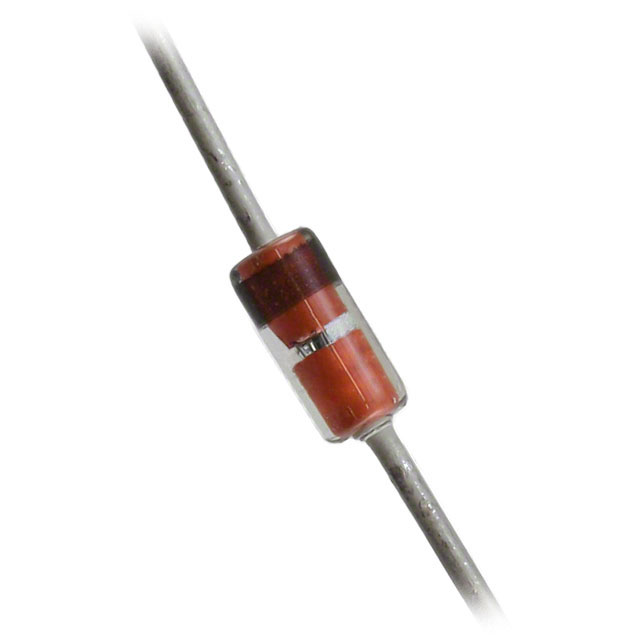
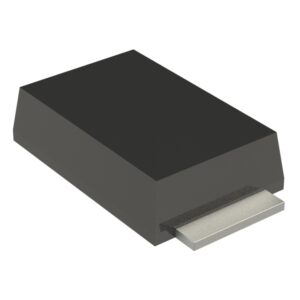
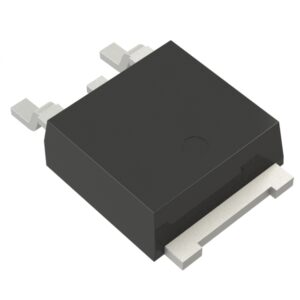
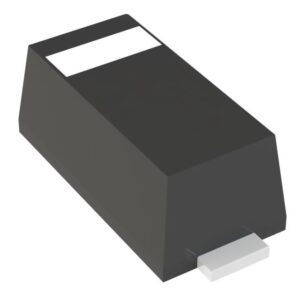
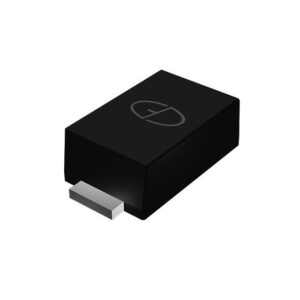
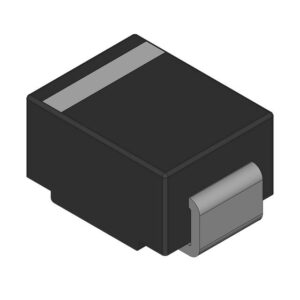
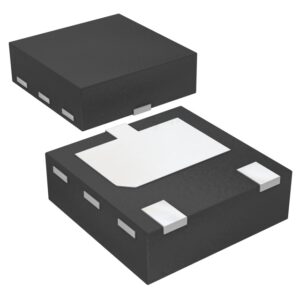
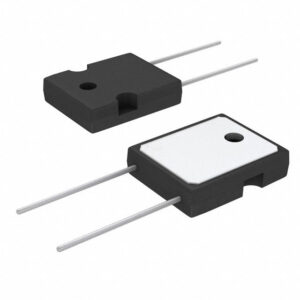
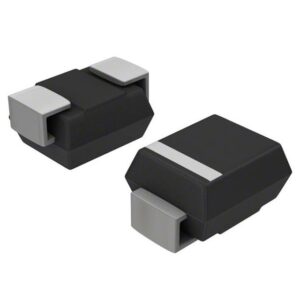
Standard Rectifier Diodes Standard Diodes (Silicon PN Junction) Standard diodes are the most basic type of rectifier diode, made from silicon with a PN junction. They’re commonly used in AC-to-DC converters, power rectification, and general circuit protection. These diodes typically have a forward voltage drop around 0.7V and are best suited for low-frequency switching. Their reverse recovery time (how quickly they stop conducting when switched off) is relatively slow, which limits their use in high-speed applications. They also have low reverse leakage current, which makes them reliable for steady-state operations. Schottky Barrier Diodes (SBD) Schottky diodes (SBDs) use a metal-semiconductor junction instead of a traditional PN junction, resulting in faster switching speeds and lower forward voltage drops—often between 0.2V and 0.4V. This makes them ideal for DC-DC converters, high-efficiency power supplies, and circuits where minimizing power loss is critical. However, one drawback of SBDs is their higher reverse leakage current, especially at elevated temperatures, which can be a concern in precision or battery-operated devices. Super Barrier Rectifiers (SBR) Super Barrier Rectifiers (SBRs) combine the best traits of standard diodes and Schottky diodes. They offer low forward voltage drop like SBDs, but with significantly lower reverse leakage current and improved reverse voltage handling. SBRs are well-suited for switching power converters, adapters, and automotive electronics, where energy efficiency and thermal stability are important. They’re often a better choice than Schottky diodes when the application involves higher ambient temperatures or larger voltage transients. Avalanche Diodes Avalanche diodes are designed to operate reliably in reverse breakdown mode, where they safely conduct current once a specific reverse voltage threshold is exceeded. Unlike standard diodes that can be damaged by breakdown, avalanche diodes are built to handle this condition repeatedly and predictably. In fast switching rectification, avalanche diodes are sometimes preferred over standard PN diodes because of their improved reverse recovery behavior, which reduces switching losses and improves overall converter efficiency. Their ability to withstand high reverse voltage transients without degradation makes them particularly suited for snubber circuits, flyback converters, and hard-switched topologies. Silicon Carbide (SiC) Diodes SiC diodes are built from silicon carbide, a wide-bandgap material that allows them to handle very high voltages (600V and up) and extreme temperatures (>150°C). They are ideal for industrial converters, electric vehicle chargers, solar inverters, and motor drives, especially in circuits requiring fast switching and zero reverse recovery time. Although more expensive than silicon-based diodes, their durability and efficiency at high voltages and frequencies often make them the best long-term choice in demanding applications.

Learn what an integrated circuit is, how ICs work, the main types and the specs to check before choosing a part for your design…
Read More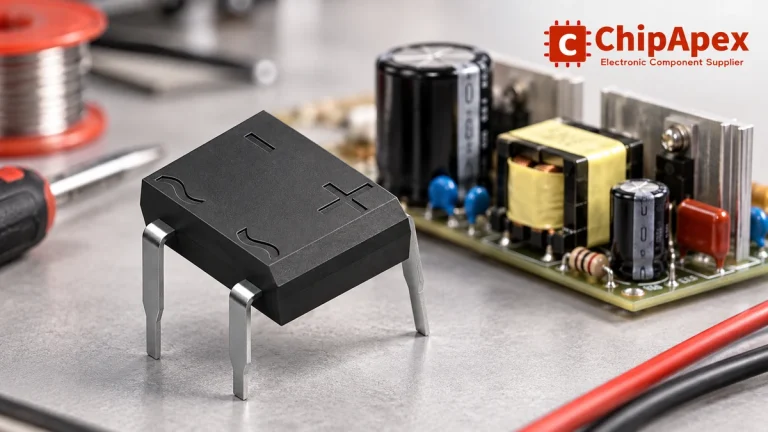
Select a bridge rectifier by reverse voltage, capacitor charging current, startup surge and cooling. Work through a stated DC voltage and ripple example.
Read More
What Is NOR Flash? Why It Still Powers Critical Embedded Systems When your car’s engine control unit boots in milliseconds…When a medical device executes…
Read More
See how a MEMS gyroscope measures angular rate, why its angle estimate drifts, and which range, noise, interface and temperature specs to compare.
Read More
Find out when a bare shock switch needs a pull resistor, when an MCU internal pull-up is enough, and why sensor modules and piezo…
Read More
CHICAGO, USA – May 27, 2026 – Global leading interconnect manufacturer Molex officially issued a global distributor price adjustment notice on May 27, confirming…
Read More
Understand RF attenuator dB values, fixed and programmable types, impedance, power limits and noise tradeoffs before choosing parts for an RF signal path.
Read More
The rapid advancement of artificial intelligence (AI) is transforming industries across the globe, and the world of electronic components is no exception. From smarter…
Read More
Compare thermistors, RTDs, thermocouples and temperature ICs. Learn how range, accuracy, response, interfaces and mounting affect component selection.
Read More
Learn what a battery BMS does, how protection differs from charging, and which pack specifications to check when sourcing BMS components through ChipApex.
Read More
Understand how oscillators generate timing signals, how they differ from crystals, and which frequency, output and stability specs matter when choosing one.
Read More
Wilmington, Mass. & Milpitas, Calif. – May 19, 2026 – Analog Devices, Inc. (NASDAQ: ADI), a global leader in high-performance analog and mixed-signal semiconductors,…
Read More
The activity of extra discounts on wholesale prices is in full swing…
Please fill in your contact information and we will send you the latest wholesale price list.