 ChipApex | Global Electronic Components Supplier

SEARCH
Search Product
Search Post
— IC芯片 | 连接器 | 传感器 | 被动器件 —
Search productSearch post
— IC芯片 | 连接器 | 传感器 | 被动器件 —
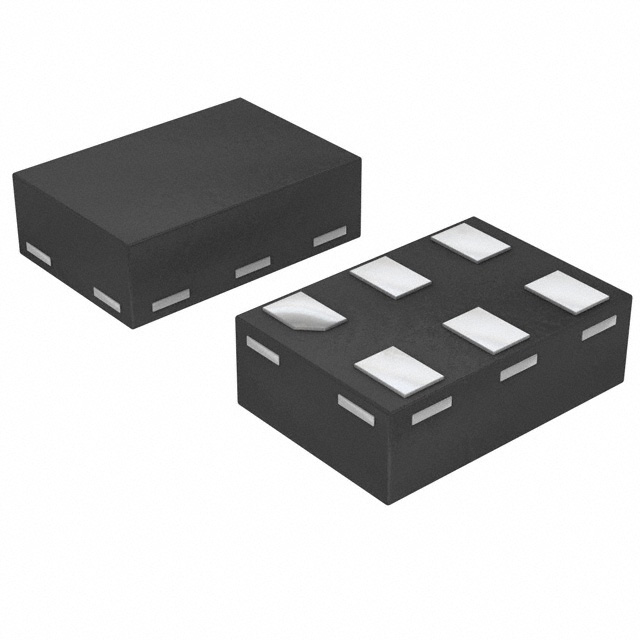
Logic buffers, drivers, receivers and transceivers allow isolated access to logic signals from one circuit for use in another circuit. Buffers pass their input signal, either unchanged or inverted, to their output and may be used to clean up a weak signal or drive a load. In a boolean logic simulator, a buffer is mainly used to increase propagation delay. Logic receivers and transceivers allow isolated communication between data buses.
| Select products | Mfr | Description | Package | Supplier Device Package | Mounting Type | Series | Operating Temperature |
|---|---|---|---|---|---|---|---|
 SN74ALVCH16827DGGR $2.18 | Texas Instruments | IC BUF NON-INVERT 3.6V 56TSSOP | Tape & Reel (TR),Cut Tape (CT),Bulk | 56-TSSOP | Surface Mount | 74ALVCH | -40°C ~ 85°C (TA) |
SN74ALVCH16827DL $1.55 | Texas Instruments | IC BUF NON-INVERT 3.6V 56SSOP | Bulk,Tube | 56-SSOP | Surface Mount | 74ALVCH | -40°C ~ 85°C (TA) |
 SN74ALVCH16827DLR $1.00 | Texas Instruments | IC BUF NON-INVERT 3.6V 56SSOP | Tape & Reel (TR),Bulk | 56-SSOP | Surface Mount | 74ALVCH | -40°C ~ 85°C (TA) |
 SN74ALVCH16832DGGR $3.03 | Texas Instruments | IC ADDRESS DRIVER 3.6V 64TSSOP | Tape & Reel (TR),Bulk | 64-TSSOP | Surface Mount | 74ALVCH | -40°C ~ 85°C (TA) |
SN74ALVCH16863DGGR $3.77 | Texas Instruments | IC TXRX NON-INVERT 3.6V 56TSSOP | Tape & Reel (TR),Cut Tape (CT),Bulk | 56-TSSOP | Surface Mount | 74ALVCH | -40°C ~ 85°C (TA) |
SN74ALVCH16863DL $2.89 | Texas Instruments | IC TXRX NON-INVERT 3.6V 56SSOP | Tube,Tube | 56-SSOP | Surface Mount | 74ALVCH | -40°C ~ 85°C (TA) |
SN74ALVCH16863DLR $3.88 | Texas Instruments | IC TXRX NON-INVERT 3.6V 56SSOP | Tape & Reel (TR),Cut Tape (CT),Bulk | 56-SSOP | Surface Mount | 74ALVCH | -40°C ~ 85°C (TA) |
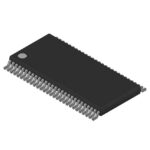 SN74ALVCH16952DGG $0.98 | Texas Instruments | REGISTERED BUS TRANSCEIVER | Bulk | - | - | * | - |
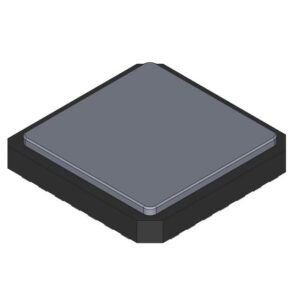 5962-9318601M3AView Product
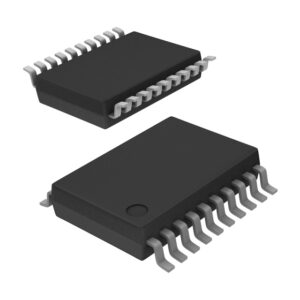 SN74ABT2245DBRG4View Product
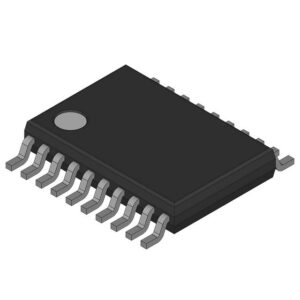 MM74HC541MTCXView Product
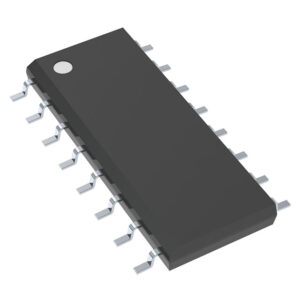 CD74HCT368M96View Product
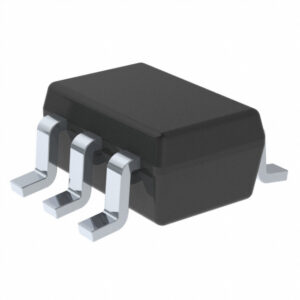 SN74LVC2G34MDCKREPView Product
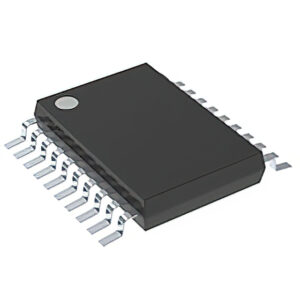 SN74LVT240APWView Product
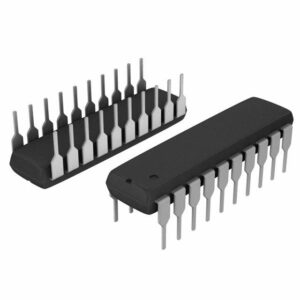 74HCT640N,652View Product
 PI74FCT162245ATVView Product
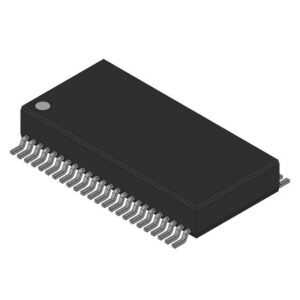 74ACT16540DLView Product
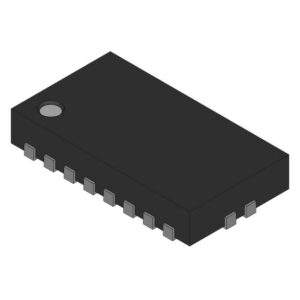 74LVC244ABQ/AUXView Product
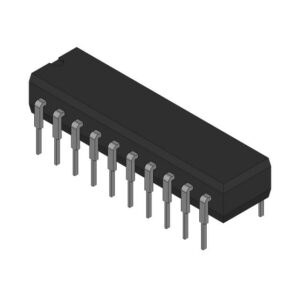 MC74F241NView Product
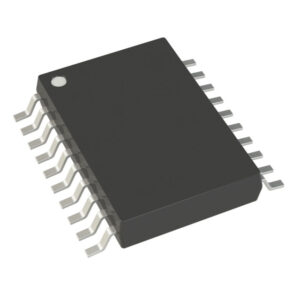 74FCT245ATPGG8View Product

If you’ve spent any time staring at a schematic, you’ve seen the triangle. Two inputs, one output, and a gain symbol that looks deceptively…
Read More
See when an inductor behaves linearly, how DC bias and saturation reduce inductance, and which current and temperature curves to check.
Read More
Learn what data acquisition means, from sensors and conditioning to sampling and storage. Review channel timing, wiring, calibration and data quality.
Read More
Choose a DIP switch by contact type, coded positions, footprint and signal ratings. Check logic polarity, assembly conditions and PCB configuration behavior.
Read More
Compare thermistors, RTDs, thermocouples and temperature ICs. Learn how range, accuracy, response, interfaces and mounting affect component selection.
Read More
Find out when a bare shock switch needs a pull resistor, when an MCU internal pull-up is enough, and why sensor modules and piezo…
Read More
Recently, the global electronic components market has been constantly evolving, and different regions and enterprises have witnessed new moves in aspects such as technological…
Read More
Compare RC, crystal and MEMS oscillator circuits. Check ppm, jitter, load capacitance, startup margin and output compatibility before choosing a clock source.
Read More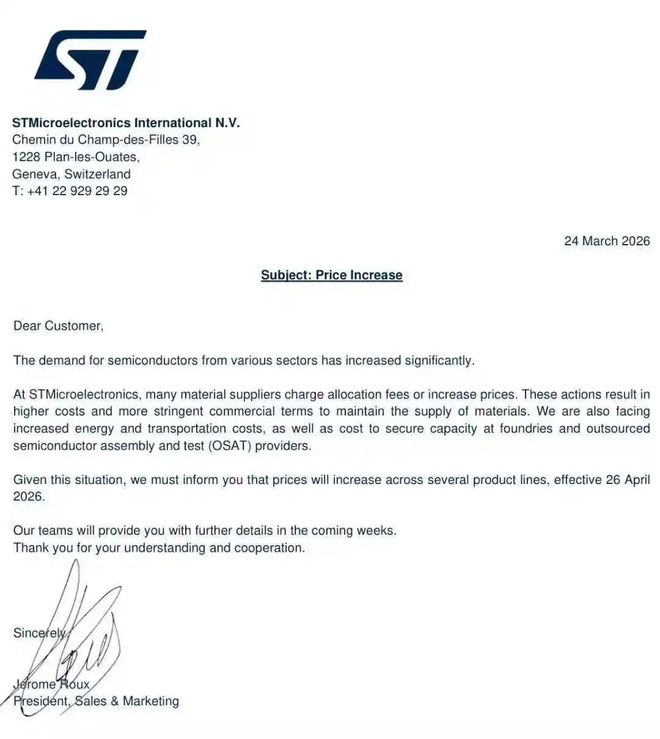
Geneva, Switzerland – March 25, 2026 – STMicroelectronics N.V. (NYSE: STM), a global semiconductor leader serving customers across the electronics applications spectrum, has announced…
Read More
Learn how to use ferrite beads for noise filtering. Check impedance, DC bias, placement, resonance and load-step behavior before selecting a part.
Read More
Choose a pin header by pitch, mating geometry, current rating and mounting. Learn why matching pin count and spacing does not guarantee compatibility.
Read More
Understand load cell sensor output, bridge wiring and calibration. Learn how mV/V sensitivity, mechanics and ADC noise affect measurement accuracy.
Read More
The activity of extra discounts on wholesale prices is in full swing…
Please fill in your contact information and we will send you the latest wholesale price list.

