 ChipApex | Global Electronic Components Supplier

SEARCH
Search Product
Search Post
— IC芯片 | 连接器 | 传感器 | 被动器件 —
Search productSearch post
— IC芯片 | 连接器 | 传感器 | 被动器件 —
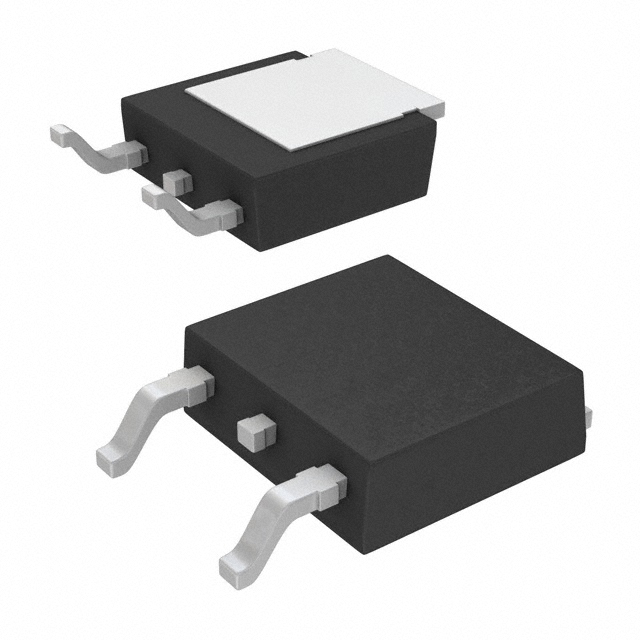
A transistor is a semiconductor device that serves as an electronic switch or amplifier, controlling current flow through one material type (usually silicon) by applying a voltage or current to another. Structurally, transistors are three-terminal components—commonly configured as emitter, base, and collector (in BJTs), or source, gate, and drain (in FETs). Since their invention, transistors have become fundamental to all modern electronics, from digital logic circuits to analog signal processing. Unlike earlier vacuum tubes, transistors are compact, reliable, and energy-efficient, operating by manipulating electron or hole movement across p-n junctions or insulated gates. Understanding the differences between transistor types—BJTs, MOSFETs, IGBTs, JFETs, and PUTs—can help you select the most appropriate component based on function, power requirements, and signal characteristics. Types of Transistors Bipolar Junction Transistors (BJTs), including NPN and PNP configurations, are current-controlled devices where base current modulates a larger collector-to-emitter current. Known for their high current gain and linear amplification characteristics, BJTs are ideal for analog applications such as audio amplification or low-frequency signal conditioning. However, their relatively low input impedance results in greater power consumption compared to field-effect devices. Field-Effect Transistors (FETs), particularly MOSFETs (Metal-Oxide-Semiconductor FETs), are voltage-controlled with very high input impedance. They regulate current via an electric field applied across an insulated gate, making them highly efficient for digital switching applications. N-channel MOSFETs generally offer superior conductivity and switching speed over P-channel devices, making them the preferred choice in power electronics and logic circuits. Insulated Gate Bipolar Transistors (IGBTs) combine the gate control of MOSFETs with the output drive of BJTs, resulting in a device that excels in high-voltage, high-current applications. They\'re widely used in power inverters, motor drives, and energy conversion systems where switching efficiency and robustness are critical. Junction Field-Effect Transistors (JFETs) provide excellent performance in low-noise, high-impedance analog circuits. Though largely replaced by MOSFETs in many roles, JFETs still serve a purpose in RF amplification and precision signal conditioning due to their simplicity and stable characteristics. Programmable Unijunction Transistors (PUTs) are specialized for use in timing circuits, waveform generation, and trigger control. These devices operate by establishing a threshold voltage at which they rapidly switch, making them useful in oscillators and control systems.
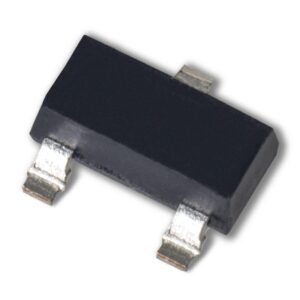 SST310 SOT-23 3L ROHSView Product
 2N6027 TRE PBFREEView Product
 SMBTA06UPNE6327HTSA1View Product
 RD3N03BATTL1View ProductIXA20PG1200DHG-TRRView Product
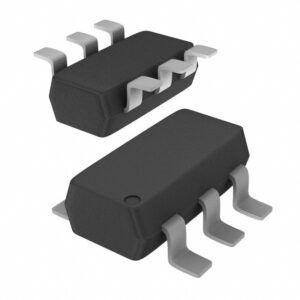 RN4603(TE85L,F)View Product
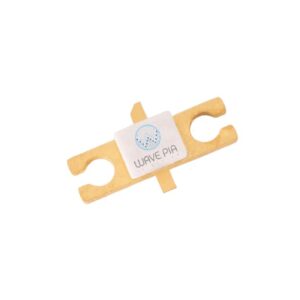 WP2806015UHView Product
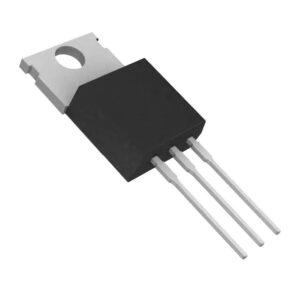 2SC4075DView ProductFF23MR12W1M1C11BPSA1View ProductHGTP3N60A4DView Product
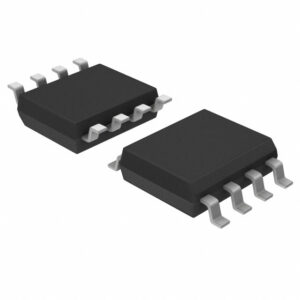 ALD910022SALView ProductS200-50View Product
Choose logic inverter ICs by thresholds, supply, output drive and delay. Compare standard and Schmitt-trigger inputs, power sequencing and replacement checks.
Read More
PLANO, Texas – March 20, 2026 – Diodes Incorporated (Nasdaq: DIOD), a leading global manufacturer and supplier of high-quality application-specific standard products in the…
Read More
TOKYO — Global leading semiconductor and power electronic components manufacturer Renesas Electronics officially issued a new price adjustment notice in early September 2026, confirming…
Read More
A perfect storm of surging demand and supply chain disruptions is roiling the global electronic components market, with advanced semiconductors and critical materials now…
Read More
Find out when a bare shock switch needs a pull resistor, when an MCU internal pull-up is enough, and why sensor modules and piezo…
Read More
Understand RF attenuator dB values, fixed and programmable types, impedance, power limits and noise tradeoffs before choosing parts for an RF signal path.
Read More
Recently, global semiconductor manufacturers have been constantly taking actions and presenting numerous new developments in aspects such as process technology and product research and…
Read More
Compare Pt100 and Pt1000 RTDs, two-, three- and four-wire connections, excitation and self-heating. Build an error budget from element to reported temperature.
Read More
Learn what an integrated circuit is, how ICs work, the main types and the specs to check before choosing a part for your design…
Read More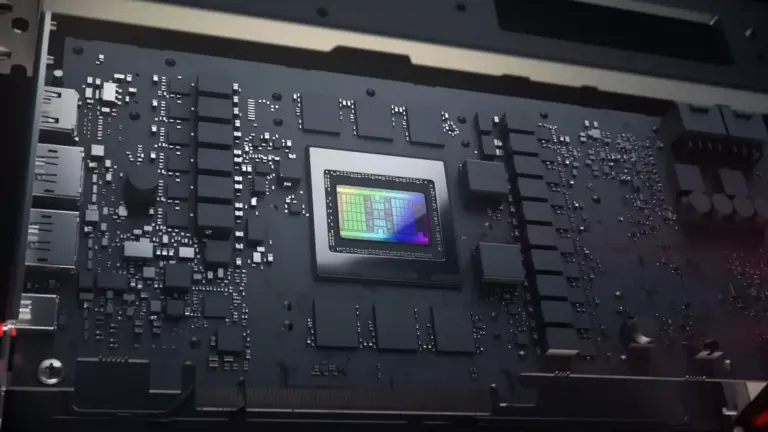
Latest updates from leading semiconductor manufacturers: Wolfspeed launches new SiC modules, AMD reveals MI430X with HBM4, TSMC eyes third Japan fab, and Samsung samples…
Read More
Monolithic Power Systems (MPS), a global leader in analog and mixed-signal semiconductors, has notified its distribution partners of an upcoming price increase for selected…
Read More
The Dutch government’s intervention in the control of Nexperia (Anshi Semiconductor) is triggering a chain reaction of turmoil in the global power semiconductor market.…
Read More
The activity of extra discounts on wholesale prices is in full swing…
Please fill in your contact information and we will send you the latest wholesale price list.

