 ChipApex | Global Electronic Components Supplier
SEARCH
Search Product
Search Post
— IC芯片 | 连接器 | 传感器 | 被动器件 —
Search productSearch post
— IC芯片 | 连接器 | 传感器 | 被动器件 —

Crystals, Oscillators, and Resonators serve as critical components in frequency control applications, each offering unique characteristics that make them suitable for different electronic design requirements. Crystals, typically crafted from precision-cut quartz, represent the foundational frequency-generating element, providing stability and precise frequency references with low aging rates and minimal temperature drift. Unlike standalone components, crystals require external oscillator circuitry to generate a usable clock signal, which can be both an advantage and limitation in circuit design. Oscillators build upon crystal technology by integrating the crystal with supporting circuitry, creating a self-contained frequency source that eliminates the need for additional external components. This integration offers advantages in complexity reduction and reliability. Advanced oscillator variants like TCXOs (Temperature-Compensated Crystal Oscillators) and VCXO (Voltage Controlled Crystal Oscillator) further enhance frequency stability through temperature compensation mechanisms, making them ideal for high-precision applications such as telecommunications, GPS systems, and network timing infrastructure. Resonators, in contrast, represent a more cost-effective alternative, typically manufactured from ceramic or Surface Acoustic Wave (SAW) materials. While inherently less precise than quartz crystals, resonators excel in applications prioritizing size, cost, and durability over extreme frequency accuracy. Their compact form factor and design make them particularly attractive for consumer electronics, automotive systems, and microcontroller-based designs where moderate frequency stability is acceptable. Resonators typically offer frequency tolerances in the range of ±0.5% to ±0.1%, compared to crystals\' remarkable ±0.005% to ±0.05% precision. The selection between these components ultimately depends on a nuanced evaluation of application-specific requirements. Designers must carefully balance factors including frequency accuracy, temperature stability, power consumption, physical size, environmental resilience, and total system cost. For mission-critical systems demanding exceptional precision, quartz crystals and high-grade oscillators remain irreplaceable. Conversely, for cost-sensitive, less demanding applications, ceramic resonators provide an elegant and economical solution. For questions and further information on Crystals, Oscillators, or Resonators visit the Tech Forum. Some common frequencies are: 32.768 kHz – Used in real-time clocks (RTCs) and low-power timing applications. 32768Hz is 215 Hz. Allows binary division for 1 second intervals. 1.8432 MHz – Common for UART baud rate communication in microcontrollers. 1.8342MHz can be divided easily to create standard rates: 115,200 = 1843200/16, 57,600 =1843200/32, etc 16.000 MHz – Frequently used with microcontrollers such as the ATmega328P (Arduino), Zigbee, and Bluetooth BLE. 19.200 MHz – Found in wireless communication devices, such as mobile phones. Used as a reference clock for CDMA/GSM 23.104 MHz – Used for a reference clock for some GPS systems.
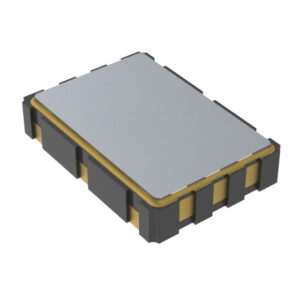 552BF000048DGRView Product
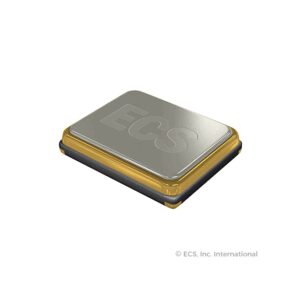 ECS-400-8-36B-7KY-TRView Product
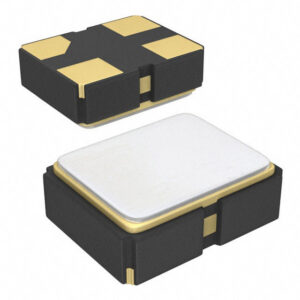 SG-9101CE-C07SGCBAView Product
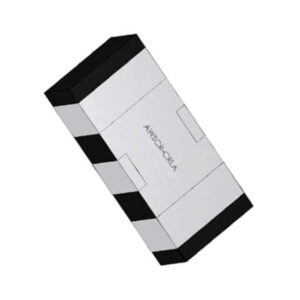 AWSCR-5.00CRLA-C39-T3View Product
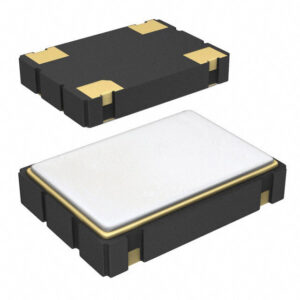 SG-8101CA 162.4500M-TCHSA0View Product516FHA000118AAGRView Product
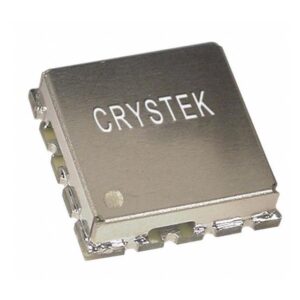 CVCO55BE-1910-2010View Product
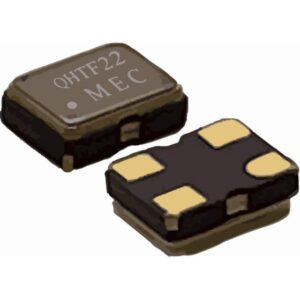 25QHTF22-10.244-PDView Product
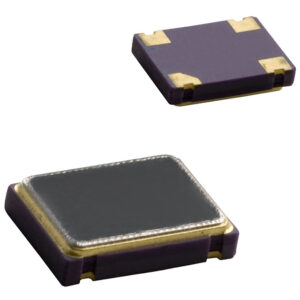 CPPC7-HT5RTView Product
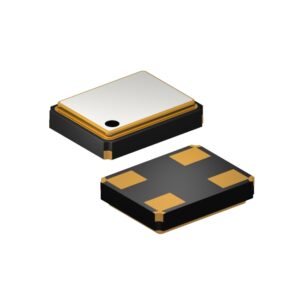 SXT32412EB07-12.288MView Product
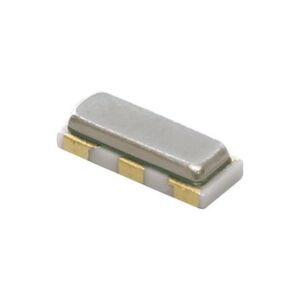 CSTNE13M5G520000R0View ProductCVCO55BE-2900-3300View Product
Understand how an electric energy meter measures power and accumulates kWh. Review sensing, phase alignment, calibration and metering IC selection.
Read More
Understand how a comparator switches at a voltage threshold, why hysteresis prevents chatter, and which output and input specs matter.
Read More
Learn the relay definition, coil and contact operation, NO and NC forms, load ratings and suppression choices. Compare mechanical, reed and solid-state types.
Read More
What Is NOR Flash? Why It Still Powers Critical Embedded Systems When your car’s engine control unit boots in milliseconds…When a medical device executes…
Read More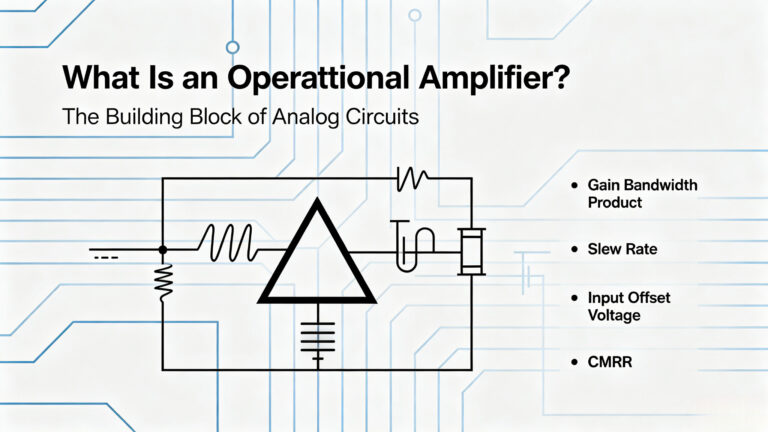
If you’ve spent any time staring at a schematic, you’ve seen the triangle. Two inputs, one output, and a gain symbol that looks deceptively…
Read More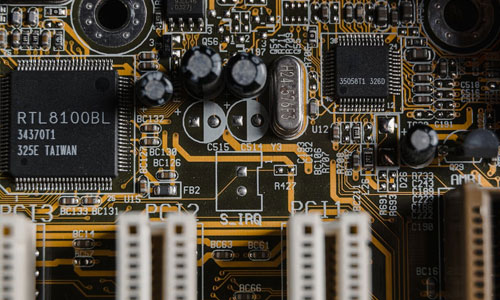
The rapid advancement of artificial intelligence (AI) is transforming industries across the globe, and the world of electronic components is no exception. From smarter…
Read More
The global electronics industry is facing an escalating shortage of tantalum capacitors, a critical passive component, as surging demand from AI servers, automotive electronics,…
Read More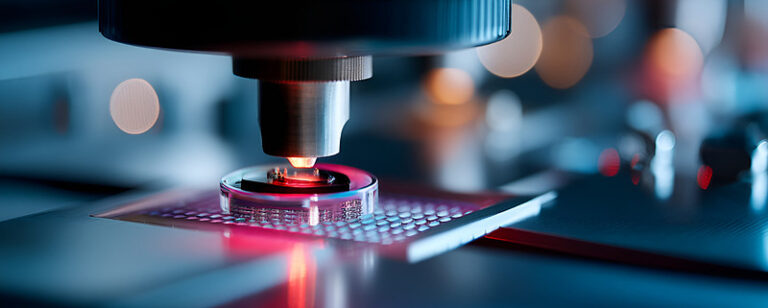
Recently, global semiconductor manufacturers have been constantly making moves in aspects such as technological cooperation, product manufacturing processes, and market layout, demonstrating the rapid…
Read More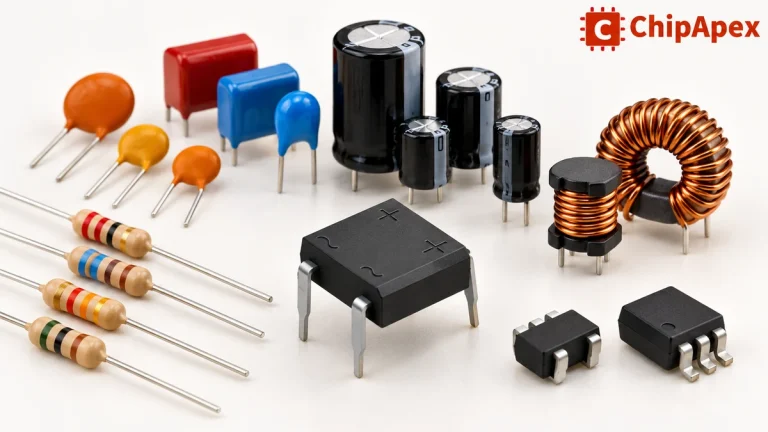
Explore electronic component types, functions, packages and datasheets. Learn selection, replacement and BOM checks before ordering parts for your PCB.
Read More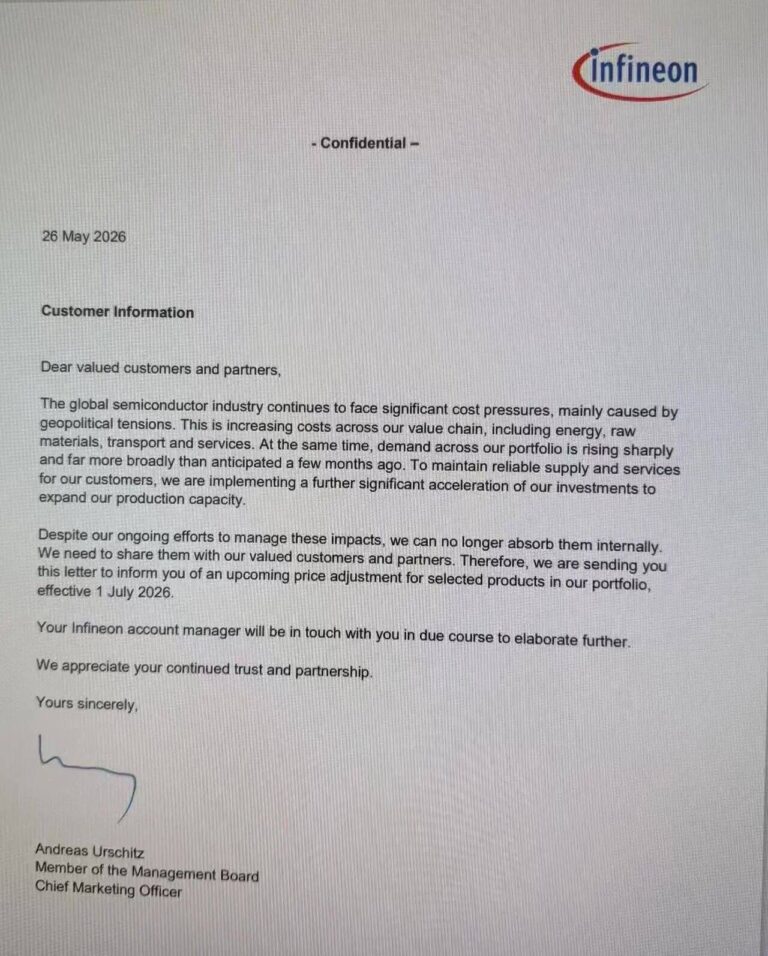
Munich, Germany – May 26, 2026 – Power semiconductor and automotive chip giant Infineon Technologies AG has formally notified customers worldwide of a second…
Read More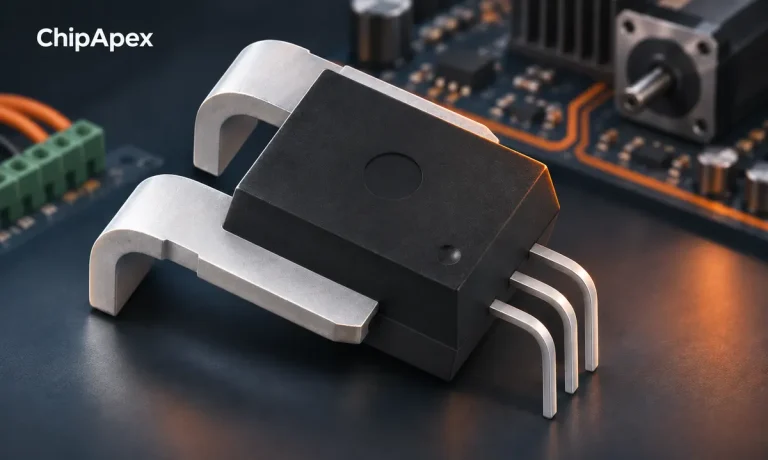
Compare Hall, shunt, current transformer and Rogowski sensing. Check AC/DC capability, accuracy, isolation, heat and response before selecting a sensor.
Read More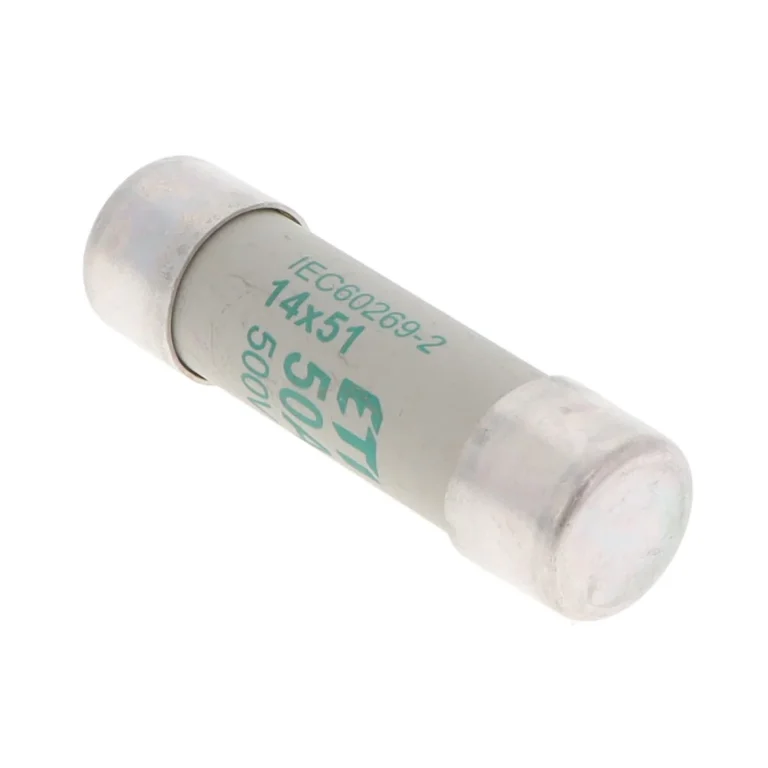
Understand HRC fuse breaking capacity, voltage and current ratings, time-current curves, and the checks needed for motor, feeder and converter protection.
Read More
The activity of extra discounts on wholesale prices is in full swing…
Please fill in your contact information and we will send you the latest wholesale price list.

