ChipApex | Global Electronic Components Supplier

SEARCH
Search Product
Search Post
— IC芯片 | 连接器 | 传感器 | 被动器件 —
Search productSearch post
— IC芯片 | 连接器 | 传感器 | 被动器件 —
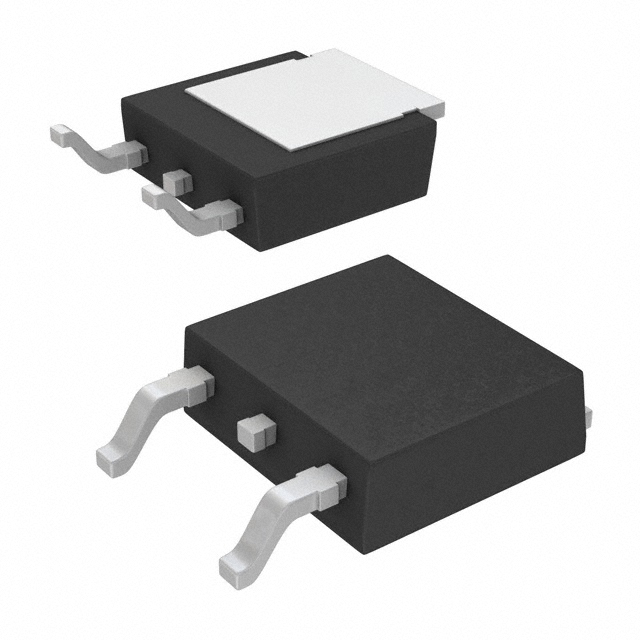
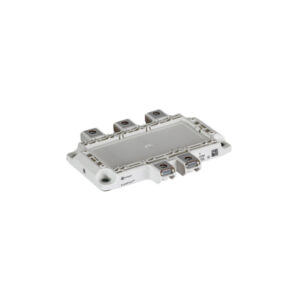
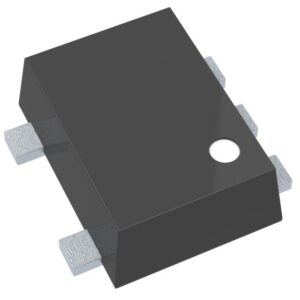
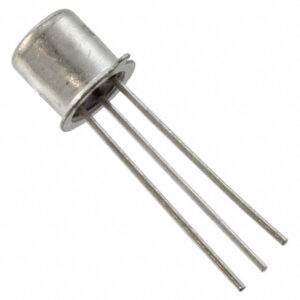
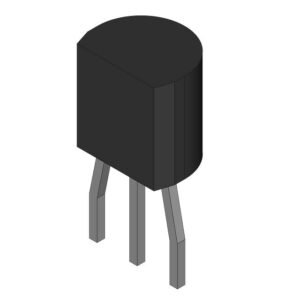
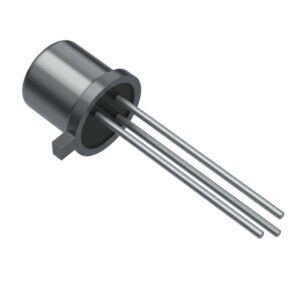
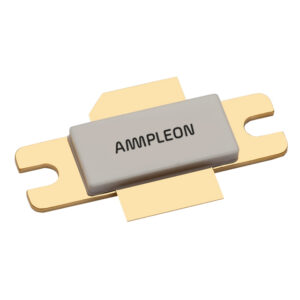
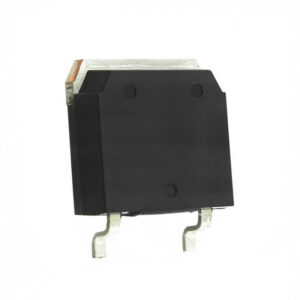
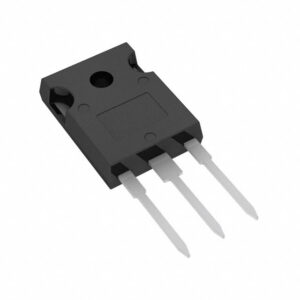
A transistor is a semiconductor device that serves as an electronic switch or amplifier, controlling current flow through one material type (usually silicon) by applying a voltage or current to another. Structurally, transistors are three-terminal components—commonly configured as emitter, base, and collector (in BJTs), or source, gate, and drain (in FETs). Since their invention, transistors have become fundamental to all modern electronics, from digital logic circuits to analog signal processing. Unlike earlier vacuum tubes, transistors are compact, reliable, and energy-efficient, operating by manipulating electron or hole movement across p-n junctions or insulated gates. Understanding the differences between transistor types—BJTs, MOSFETs, IGBTs, JFETs, and PUTs—can help you select the most appropriate component based on function, power requirements, and signal characteristics. Types of Transistors Bipolar Junction Transistors (BJTs), including NPN and PNP configurations, are current-controlled devices where base current modulates a larger collector-to-emitter current. Known for their high current gain and linear amplification characteristics, BJTs are ideal for analog applications such as audio amplification or low-frequency signal conditioning. However, their relatively low input impedance results in greater power consumption compared to field-effect devices. Field-Effect Transistors (FETs), particularly MOSFETs (Metal-Oxide-Semiconductor FETs), are voltage-controlled with very high input impedance. They regulate current via an electric field applied across an insulated gate, making them highly efficient for digital switching applications. N-channel MOSFETs generally offer superior conductivity and switching speed over P-channel devices, making them the preferred choice in power electronics and logic circuits. Insulated Gate Bipolar Transistors (IGBTs) combine the gate control of MOSFETs with the output drive of BJTs, resulting in a device that excels in high-voltage, high-current applications. They\'re widely used in power inverters, motor drives, and energy conversion systems where switching efficiency and robustness are critical. Junction Field-Effect Transistors (JFETs) provide excellent performance in low-noise, high-impedance analog circuits. Though largely replaced by MOSFETs in many roles, JFETs still serve a purpose in RF amplification and precision signal conditioning due to their simplicity and stable characteristics. Programmable Unijunction Transistors (PUTs) are specialized for use in timing circuits, waveform generation, and trigger control. These devices operate by establishing a threshold voltage at which they rapidly switch, making them useful in oscillators and control systems.
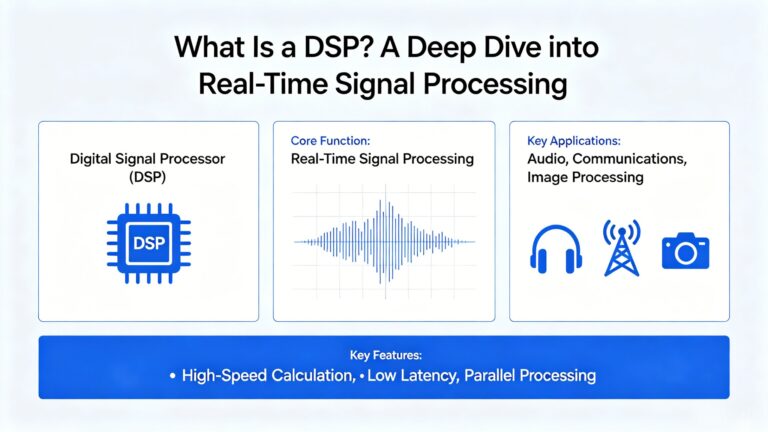
In the embedded world, general-purpose CPUs are great at running operating systems, and MCUs excel at logic control. But when you need to process…
Read More
TOKYO, July 31, 2026 — Renesas Electronics Corporation has officially announced a major domestic manufacturing restructuring, confirming plans to gradually discontinue all wafer fabrication…
Read More
If you’ve spent any time staring at a schematic, you’ve seen the triangle. Two inputs, one output, and a gain symbol that looks deceptively…
Read More
Learn why PTC resistance rises with temperature, how it differs from NTC, and which ratings matter for sensing and protection.
Read More
Choose an ADC converter by resolution, sample rate, noise and input design. Review practical tradeoffs and prepare component requirements for ChipApex.
Read More
NXP Semiconductors (NASDAQ: NXPI), a global leader in automotive, industrial, and IoT semiconductors, has officially notified customers of an upcoming price adjustment for select…
Read More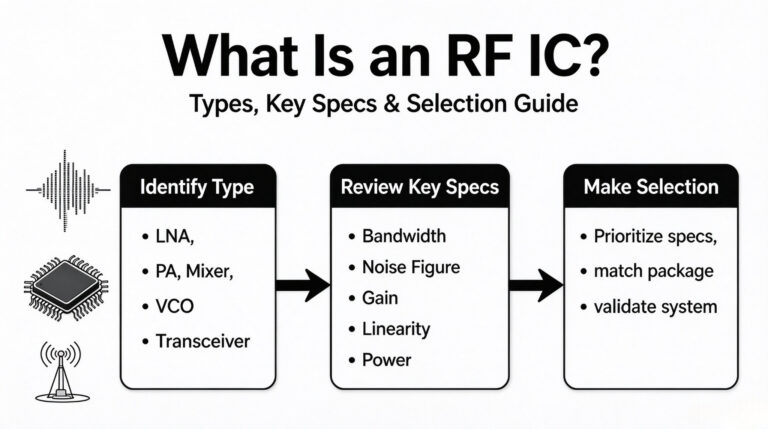
An RF IC, or radio-frequency integrated circuit, is a chip that processes wireless signals between the antenna and the baseband processor. Instead of building…
Read More
The rapid advancement of artificial intelligence (AI) is transforming industries across the globe, and the world of electronic components is no exception. From smarter…
Read More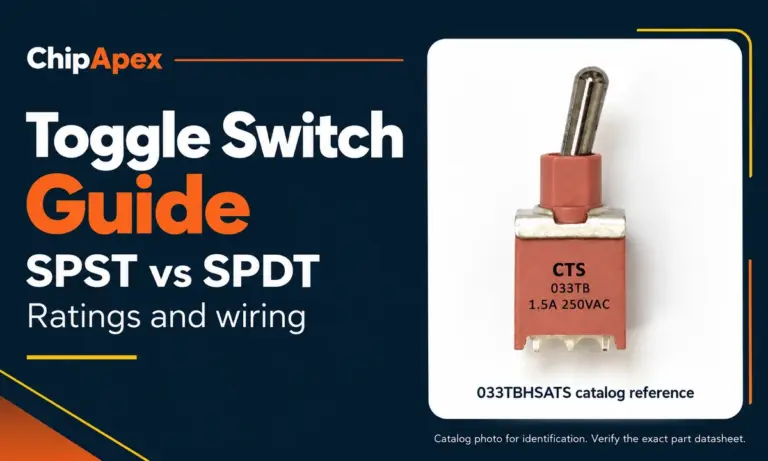
Compare SPST and SPDT toggle switches, understand AC/DC ratings, and follow wiring examples. Check contact action, mounting and parts in the ChipApex catalog.
Read More
Learn how a diode conducts, how to identify anode and cathode, and when to choose rectifier, TVS, Zener or photodiode types for a circuit.
Read More
Geneva, Switzerland – August 20, 2026 – Global leading semiconductor manufacturer STMicroelectronics (ST) has officially issued a new global price adjustment notice to global…
Read More
Embedded Integrated Circuit Modules: The Backbone of Modern Technology Embedded Integrated Circuit Modules (EICMs) have become an indispensable part of modern technology. Serving as…
Read More
The activity of extra discounts on wholesale prices is in full swing…
Please fill in your contact information and we will send you the latest wholesale price list.