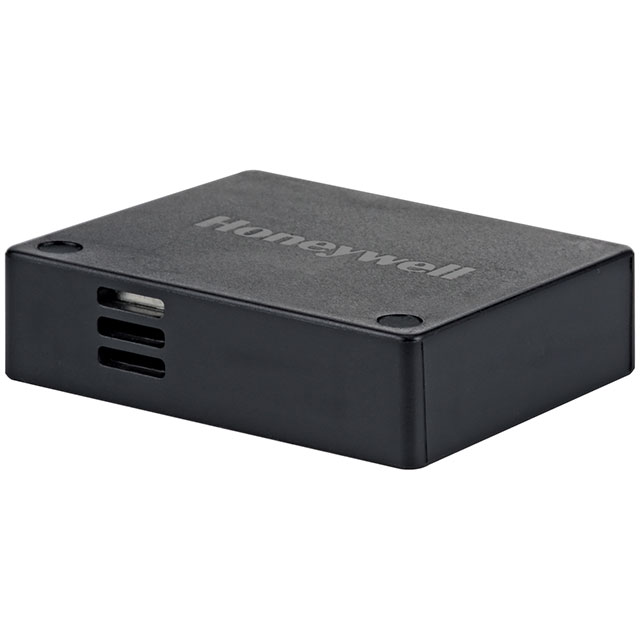
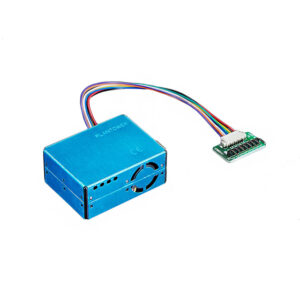
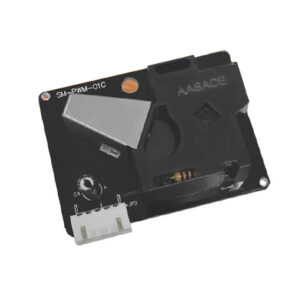
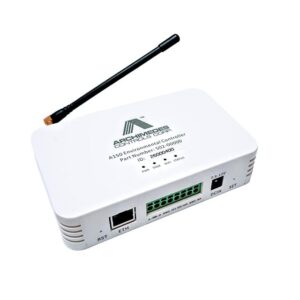
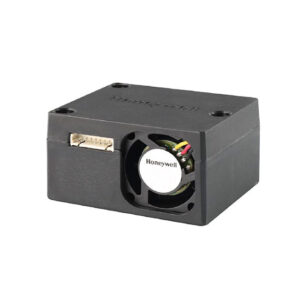
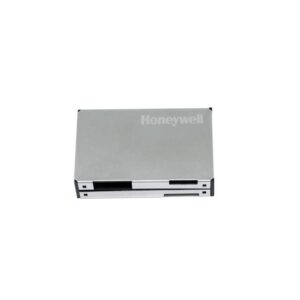
Products in the dust sensor family are modular devices used to measure the amount of suspended particulate matter in the ambient air. Used for health and safety applications, clean room monitoring, and similar purposes, the available devices are varied in their sensitivity characteristics, particle classification capabilities, maintenance requirements, and similar details of operation.
ScreenDefaultRankingPrice By Date
Particulate Sensors: Features and Specifications
Function in the design. A particle sensor estimates airborne particle concentration using a device-specific measurement method. Start with the role the component plays in the measurement assembly. Check detectable particle sizes, airflow requirements and calibration conditions. A sensor converts a physical quantity into a usable signal, with output and conditioning dependent on the sensing principle. On the assembly drawing, identify which part performs each function. That distinction is useful when two catalog categories have similar names.
GP2Y1010AU0F at a glance. The listing for GP2Y1010AU0F gives type as Infrared (IR), sensitivity as 0.5V/(0.1mg/m3), current - dc forward (if) (max) as 20 mA. These values apply to this ordering code. Check the manufacturer’s description before carrying them over to another member of the family. When you enter a rating in the bill of materials, copy its unit and the conditions attached to it. That gives the next engineer enough information to compare another part on the same basis.
Differences within the range. For type, GP2Y1010AU0F is listed as Infrared (IR) and SPS30 as Air Sensor. When comparing particle, dust sensors, distinguish a property shown for an individual model from a requirement shared by the whole design. Short descriptions often omit the detail that decides whether a part fits. Check the drawing for differences that affect assembly. For differences in operation, find the corresponding row in the manufacturer’s characteristic table and read the test conditions.
Particulate Sensors: Applications and Design Considerations
Typical operating conditions. It supports air monitoring and filtration control. For this use, specify the physical quantity of interest, expected range, response time and influence of the mounting arrangement. Write down the conditions at the installation site. If the bench setup reproduces only one of them, record what still needs testing in the assembled equipment. Include at least one representative operating case and the most demanding credible case in the comparison.
Integration example. The listing for SPS30 gives output type as I2C, UART, sensitivity as 10μg/m3, current - dc forward (if) (max) as 60 mA. Which of those values does the existing design fix? Mark those first. The remaining values give you room to consider another part. The listing for HPMA115S0-XXX gives mounting type as Chassis Mount, operating temperature as -20°C ~ 50°C, package / case as Module. For an existing interface, place its drawing next to the product record. Resolve any discrepancy while the layout can still change and before ordering parts for evaluation.
Checks on the prototype. Test the complete measurement path, including mounting and signal conditioning. A repeatable reading at one point does not establish accuracy across the full range. Record how the part was installed and what you observed. Include the operating conditions so someone else can repeat the measurement. During the particle, dust sensors check, check detectable particle sizes, airflow requirements and calibration conditions. If the reading is near the limit, repeat the original measurement. Then vary one condition at a time to see whether the component or the setup accounts for the difference.
Selection Criteria for Particulate Sensors
Define the acceptance criteria. Check detectable particle sizes, airflow requirements and calibration conditions. Set a pass or fail limit for each critical requirement before comparing prices. For this category, useful starting columns from the catalog include type, sensitivity, current - dc forward (if) (max), voltage - supply. Give each critical value a unit and an acceptable range. A blank field leaves an open question. Check the datasheet for that particular ordering code before entering a value in the comparison table.
Compare exact ordering codes. The listing for HPMA115S0-XXX gives sensitivity as 15μg/m3, voltage - supply as 5V, mounting type as Chassis Mount. Check the complete manufacturer part number, including suffixes, against the ordering table for the device you intend to buy. For package / case, the respective entries for SPS30 and HPMA115S0-XXX are Box and Module. Check which of these values the assembly drawing or design specification requires. If the table gives only a typical value, look for a guaranteed limit at your operating conditions. The typical figure alone gives you little basis for rejecting a delivered part.
Prepare the purchase specification. For a quotation, identify the required particle, dust sensors by manufacturer and complete part number. If alternatives are acceptable, state which differences require engineering approval. Tell purchasing how many pieces you need, when they must arrive and which packing formats the assembly line can accept. Before approving an alternative for the measurement assembly, compare it against the same acceptance criteria used for the original part and keep the comparison with the released bill of materials.
 ChipApex | Global Electronic Components Supplier