ChipApex | Global Electronic Components Supplier

SEARCH
Search Product
Search Post
— IC芯片 | 连接器 | 传感器 | 被动器件 —
Search productSearch post
— IC芯片 | 连接器 | 传感器 | 被动器件 —

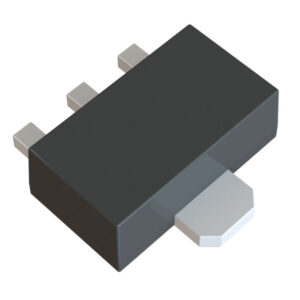
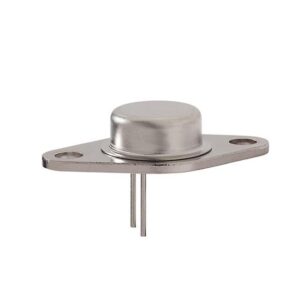
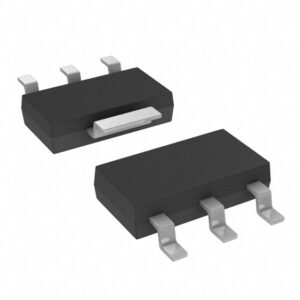
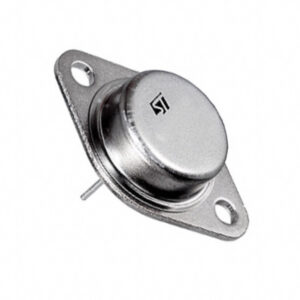
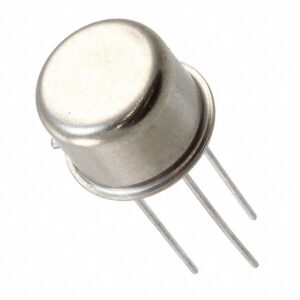
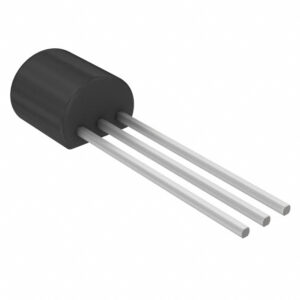
Discrete Bipolar Junction Transistors (BJTs) are commonly used to construct analog signal amplification functions in audio, radio, and other applications. One of the first semiconductor devices to be mass produced, their characteristics are less favorable than those of other device types for applications involving high frequency switching and operation with high currents or voltages, but they remain a technology of choice for applications requiring analog signal reproduction with minimal added noise and distortion. BJTs come in two varieties - NPN and PNP - which refer to the sequence of semiconductor layers that make up the transistor. NPN transistors consist of a thin P-type semiconductor between two N-type materials, while PNP transistors have an N-type semiconductor between two P-types. This gives the two types opposite polarity operation. NPN transistors sink current, while PNP transistors source current.
| Select products | Mfr | Description | Package | Supplier Device Package | Mounting Type | Series | Operating Temperature |
|---|---|---|---|---|---|---|---|
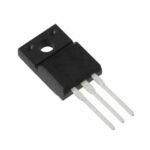
| Toshiba Semiconductor and Storage | TRANS NPN 230V 1A TO-220NIS | Bulk | TO-220NIS | Through Hole | - | 150°C (TJ) | |
| Toshiba Semiconductor and Storage | TRANS NPN 230V 1A TO-220NIS | Bulk | TO-220NIS | Through Hole | - | 150°C (TJ) | |
| Toshiba Semiconductor and Storage | TRANS NPN 230V 1A TO-220NIS | Bulk | TO-220NIS | Through Hole | - | 150°C (TJ) | |
| Toshiba Semiconductor and Storage | TRANS NPN 230V 1A TO-220NIS | Bulk | TO-220NIS | Through Hole | - | 150°C (TJ) | |
| Toshiba Semiconductor and Storage | TRANS NPN 230V 1A TO-220NIS | Bulk | TO-220NIS | Through Hole | - | 150°C (TJ) | |
| Toshiba Semiconductor and Storage | TRANS NPN 230V 1A TO-220NIS | Bulk | TO-220NIS | Through Hole | - | 150°C (TJ) | |
| Toshiba Semiconductor and Storage | TRANS NPN 230V 1A TO-220NIS | Bulk | TO-220NIS | Through Hole | - | 150°C (TJ) | |
| Toshiba Semiconductor and Storage | TRANS NPN 230V 1A TO-220NIS | Bulk | TO-220NIS | Through Hole | - | 150°C (TJ) |

As the backbone of modern technology, electronic components are undergoing revolutionary changes, driven by advancements in materials science, miniaturization, and smart manufacturing. From ultra-efficient…
Read More
Recently, the global electronic component market has witnessed a series of new developments. The strategic layouts and market collaborations of major enterprises are constantly…
Read More
Recently, the global electronic components market has been constantly evolving, and different regions and enterprises have witnessed new moves in aspects such as technological…
Read More
May 8, 2026 – Eindhoven, Netherlands NXP Semiconductors (NXPI), a global leader in automotive and industrial semiconductor solutions, has officially notified its worldwide channel…
Read More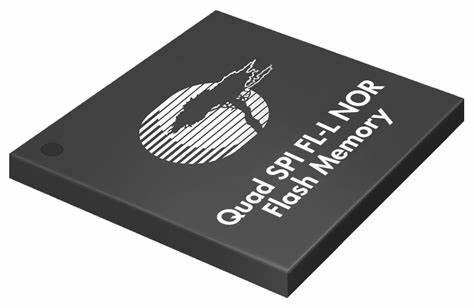
What Is NOR Flash? Why It Still Powers Critical Embedded Systems When your car’s engine control unit boots in milliseconds…When a medical device executes…
Read More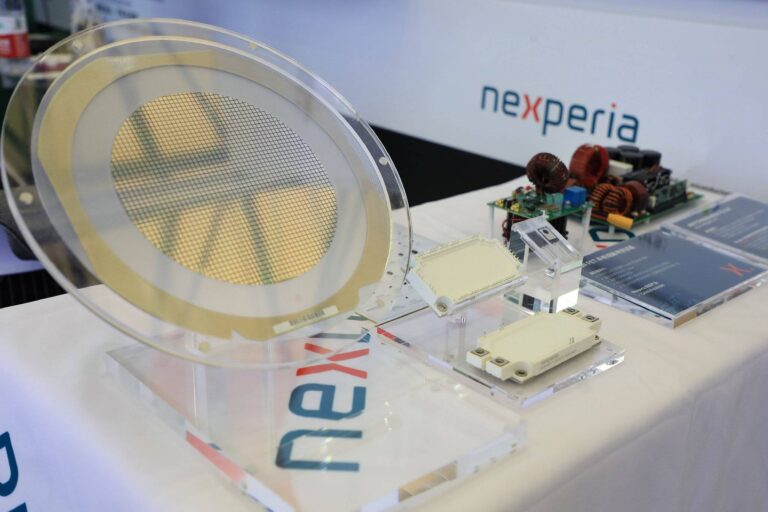
Dutch authorities announced on November 7 the lifting of control measures on Nexperia (formerly NXP Semiconductors’ Standard Products division), marking the end of a…
Read More
Learn how a diode conducts, how to identify anode and cathode, and when to choose rectifier, TVS, Zener or photodiode types for a circuit.
Read More
Choose an AC to DC converter by input range, output demand, isolation, efficiency and thermal derating. Compare architectures and check installation needs.
Read More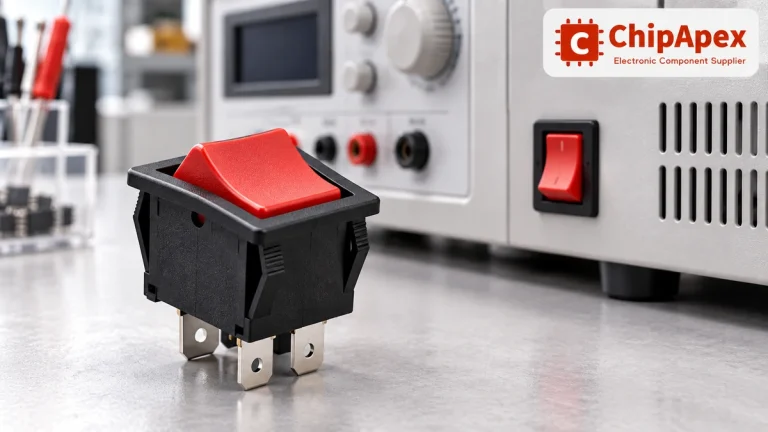
Choose a rocker switch by AC/DC ratings, contact arrangement, illumination, panel fit and sealing. Get practical checks for engineering and component sourcing.
Read More
Learn how rectifiers convert AC to DC, compare half-wave and bridge circuits, and select voltage, current, recovery and thermal ratings for your design.
Read More
Latest updates from leading semiconductor manufacturers: Wolfspeed launches new SiC modules, AMD reveals MI430X with HBM4, TSMC eyes third Japan fab, and Samsung samples…
Read More
Select a bridge rectifier by reverse voltage, capacitor charging current, startup surge and cooling. Work through a stated DC voltage and ripple example.
Read More
The activity of extra discounts on wholesale prices is in full swing…
Please fill in your contact information and we will send you the latest wholesale price list.